

Aiming for University DX!
The Internet has dramatically changed society. New technology transforms society, and that transformation accelerates the speed of research and development. Then, the new technologies created there further accelerate society—the speed of societal change is growing ever faster.
The global movement to “reform” organizations to be able to “change” quickly in response to digital speed is “DX: Digital Transformation.” Until recently, this movement remained slow in Japan, but with the recent COVID pandemic, DX has progressed rapidly, with remote meetings spreading all at once.
INIAD is a faculty created from the beginning with the concept of university DX, and its education aims to nurture human resources with the wisdom to DX organizations and society. Furthermore, in response to the generative AI revolution from late 2022, INIAD has pioneered in establishing an educational environment that actively utilizes AI.
Wisdom Required in the Generative AI Era
The use and creation of new technology—research and development requires the wisdom of “science.”
However, even if you succeed in developing new technology, that alone cannot bring the technology to society. The wisdom of “liberal arts” is necessary for how to connect new technology to sustainable business and how to utilize it to solve social problems, including how to clear relevant laws and regulations.
Furthermore, even with similar services, the difference in how well they match people’s sensibilities—such as one service being easier to use or more enjoyable to use—makes a big difference in results when they spread. What creates that difference is design and the wisdom of “art.”
In the generative AI era, the ability to create new value by demonstrating these types of wisdom in collaboration with AI is required. For this, it is necessary to understand the possibilities and limitations of AI and have the ability to give appropriate instructions. At the same time, the ability to critically evaluate AI output and add uniquely human creativity and ethical judgment is also important.
The Power to Connect
The Internet dramatically changed society because it openly and widely connected “people to people.”
Email and homepages that only connect within specific companies could never have had such power. Being able to connect “anytime, anywhere, with anyone” if you know the email address or URL—that openness is the power of the Internet. The next major wave of technological and social innovation is said to be “IoT: Internet of Things” and “AI: Artificial Intelligence.” An era is coming where the “things” around us connect to networks, and “things and people,” “things and things,” “things and AI,” and “people and AI” connect openly. Robots based on generative AI that have learned vision and hearing will also become common. Beyond the conventional Internet world, the net is merging with the real world. Related laws and systems become more complex. INIAD nurtures human resources who will serve as bridges connecting technology and society in such a complexly connected world.
Toward Information Networking Studies
In today’s accelerated era of change—if AI+IoT era services and products that integrate wisdom of “liberal arts, art, and science” at a high level are the premise, even young people can achieve success more quickly. But at the same time, no matter how excellent a person is, no one can achieve a high level in all areas of “liberal arts, art, and science” alone.
The human resources needed now are those who have understanding even in fields they are not proficient in, can dialogue with other colleagues—and furthermore with AI in a common language, collaborate, and accomplish projects.
What we created for this purpose is the knowledge of “liberal arts, art, and science” for networking, and “Information Networking Studies” which researches how to network and achieve objectives, with “INIAD: Faculty of Information Networking for Innovation and Design” providing its practical education. Even in the generative AI era, INIAD continues to incorporate cutting-edge technology and educational methods, nurturing human resources who can adapt to change.
The Concept is “Networking”
Modern society is built on various science and technologies, starting with computers and the Internet. It has become an era where it is difficult for one person to understand and operate everything alone. What is needed now is the cooperation and networking of many people.
In today’s Internet society, the world is becoming increasingly easier for taking on challenges
Geographic constraints have disappeared thanks to the Internet, making it easier to meet like-minded people who can work together.
You can cooperate and work together with people in distant places (crowdsourcing), send designs to have things made and have them sent back via (international) courier service. If you create an attractive prototype, you can widely gather funds from around the world through the Internet (crowdfunding).
Around the world, young people are increasingly achieving success through “startups” by launching innovative products in this way.
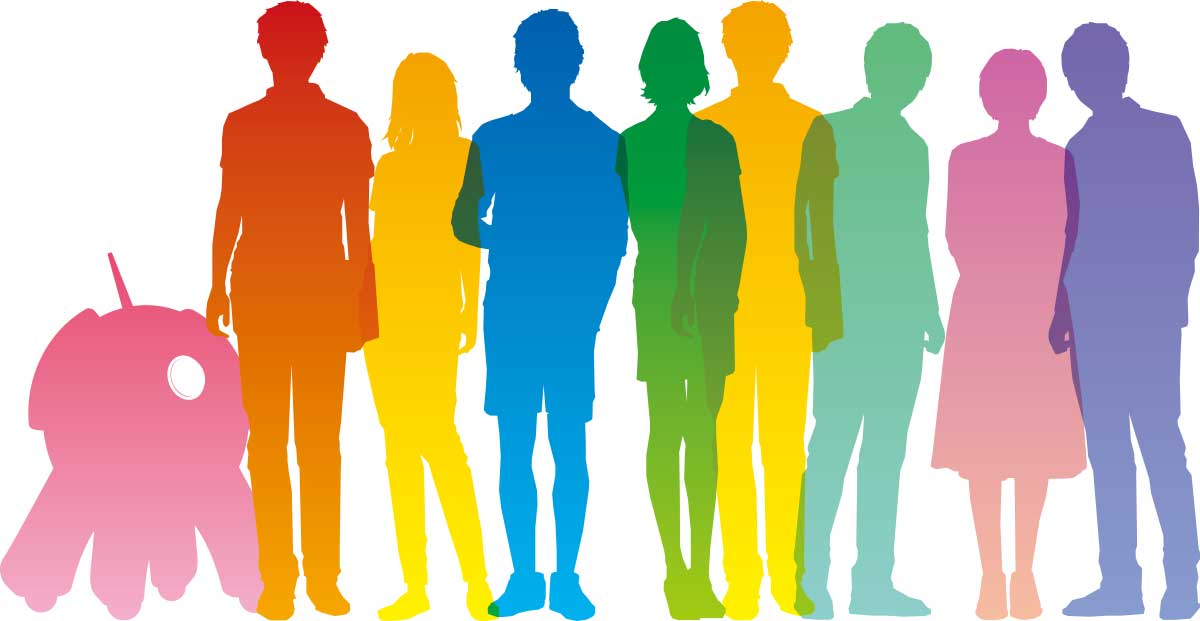
If you combine and “network” various functions and services on the Internet…
Various functional blocks can be easily obtained from the Internet, and smartphone development environments have become robust. Using AI, even with just a little programming ability, it becomes possible to create advanced applications and realize new services.
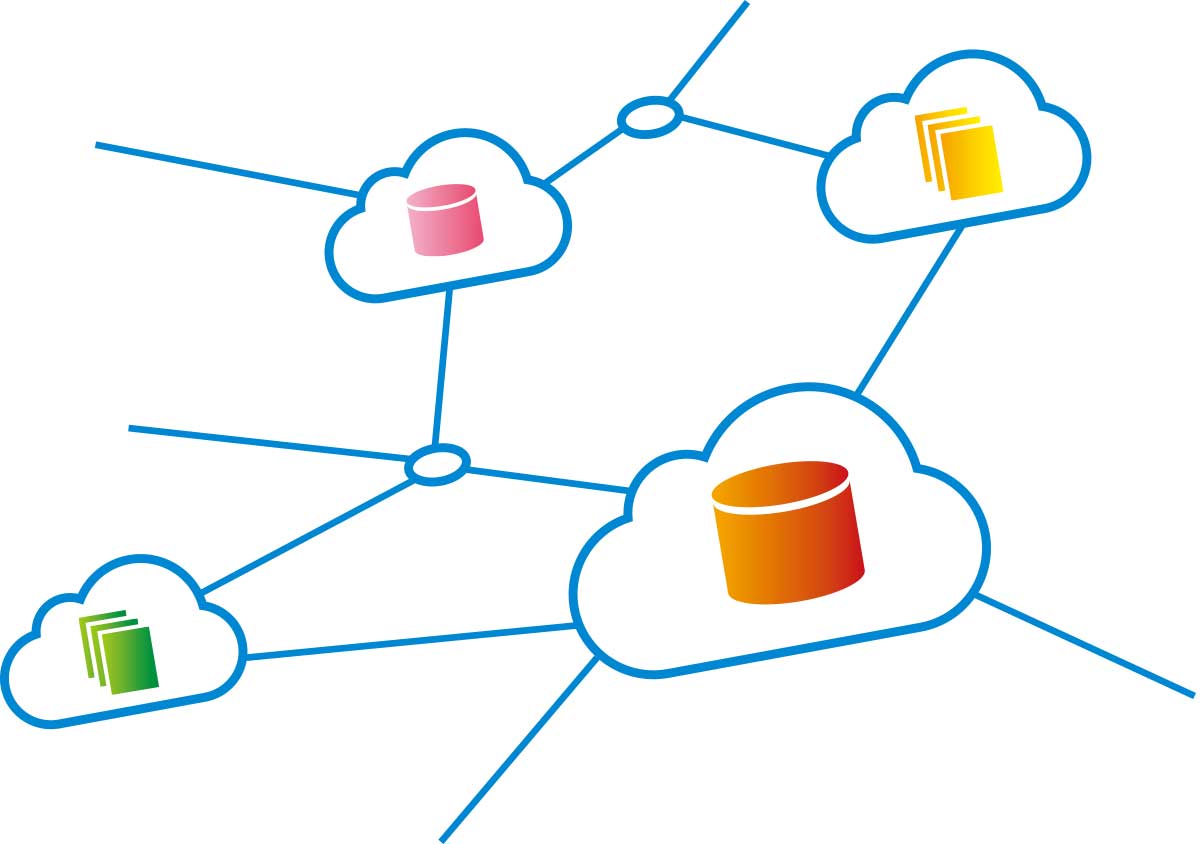
The foundation of “networking” is computer science and AI
The human resources needed now are those who can form teams, master computers, network through information, skillfully use AI to quickly turn ideas into reality.
The ability to network is the key to the future
Master digital environments such as the Internet, IoT, and AI through programming. “Network” with other people and organizations to quickly realize new services.
Spread services to society through new business models, system design, and community building.―there are seven subject groups to develop such diverse abilities, and combined study is possible.
Cross-disciplinary team practicum
Regardless of the subject groups students have chosen, they form cross-disciplinary teams and engage in practicum addressing common challenges.
CS education for all students
CS—Computer Science is what builds programming skills.
We emphasize CS education as the foundation of networking and provide CS fundamentals and programming education to all students.

Emphasis oncommunication skills
To solve common challenges together among those with different specializations and diverse nationalities, students acquire practical communication skills including “English,” “presentation,” and “debate.” And this also leads to the ability to draw out AI’s maximum performance through dialogue.
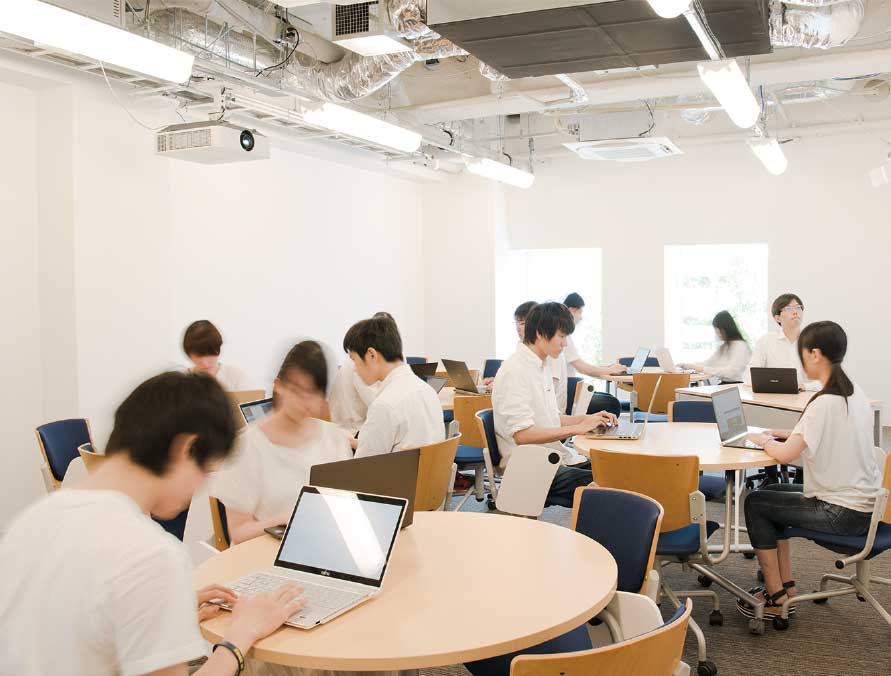
Encouraging active use ofAI in all learning aspects
We recommend the use of AI tools in all classes, provide systematic education in AI usage skills, and conduct exercises in problem-solving through co-creation with AI.
“Programming thinking and AI utilization ability” as powers that will help you in life, no matter what kind of life you lead