In the required third-year subject “Information Networking Team Practicum,” students bring together specialized knowledge and skills from their subject groups and execute projects over one year. With different themes each year such as “Contributing to the Olympics and Paralympics,” “SDGs,” and “New Normal,” students themselves plan and execute projects.
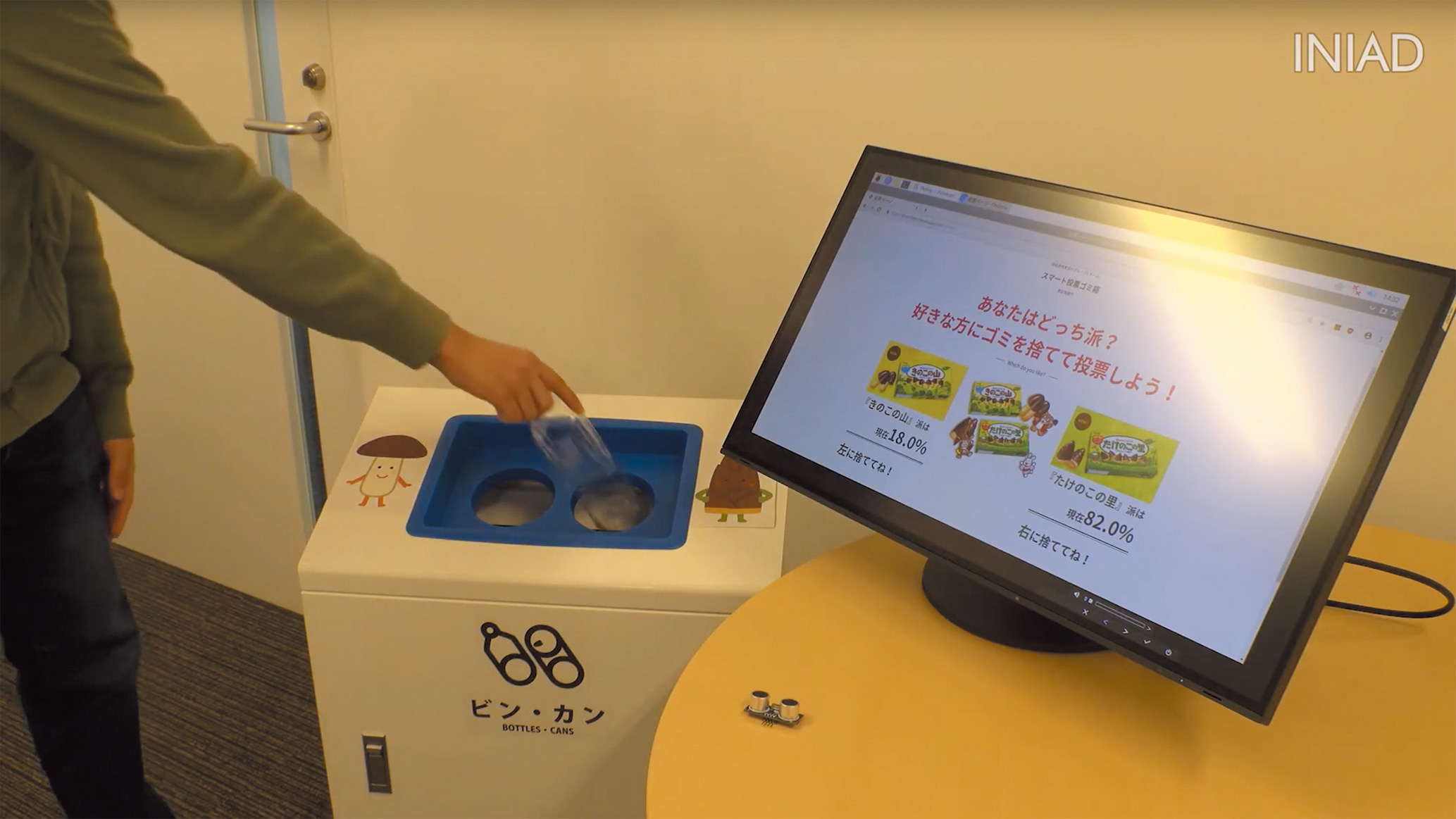
Smart Trash Can
This project aims to solve the garbage problem at the Tokyo 2020 Olympics and Paralympics by developing a smart trash can with voting functionality to motivate people to properly dispose of garbage. Ultrasonic sensors are installed in a trash can with an entrance divided into two sections, and by measuring garbage volume, the screen displays which entrance has received more garbage. It also has a function to notify Slack when the trash can is full. It was actually operated at INIAD’s university festival.
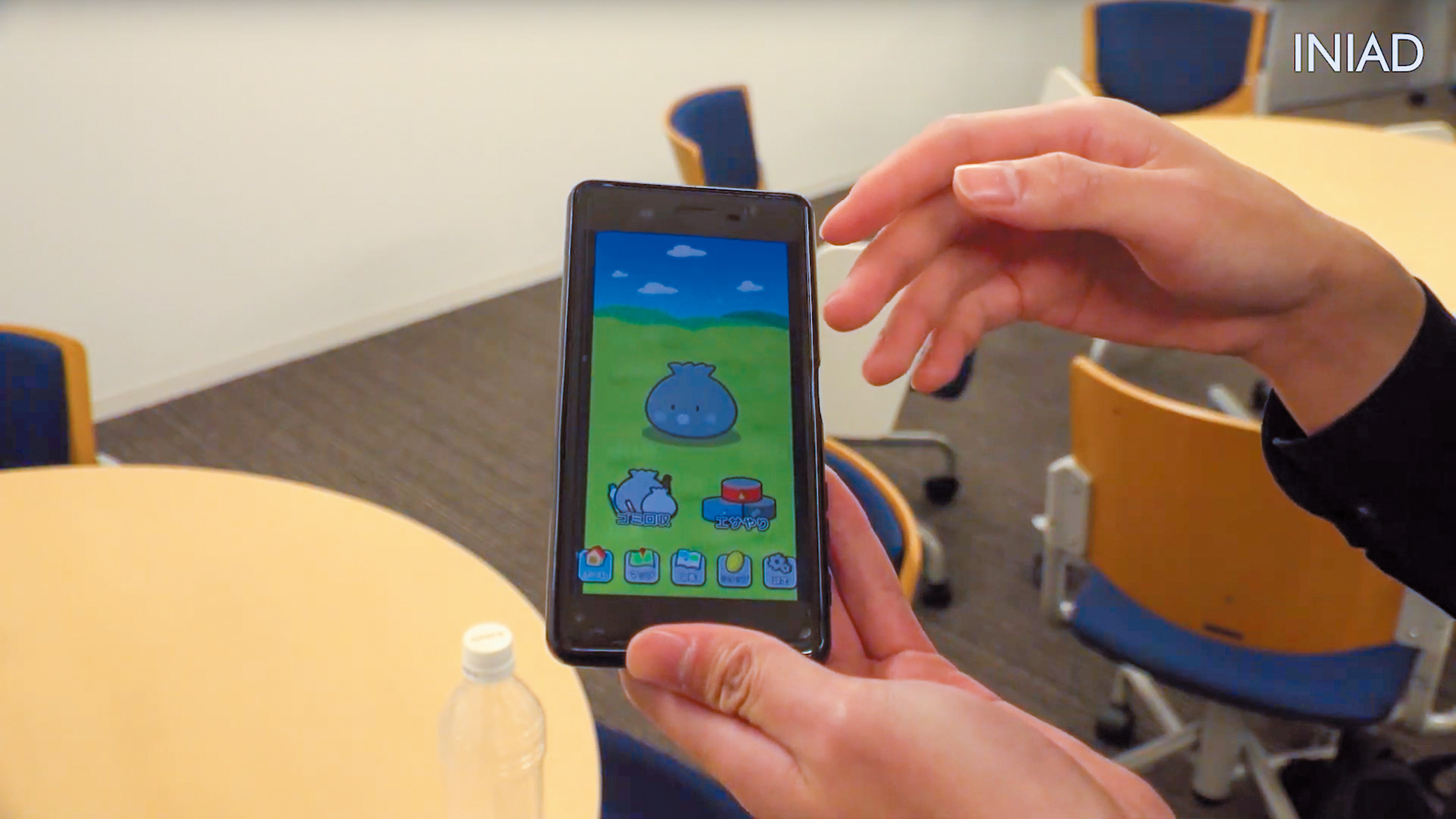
Gomimon
This project develops an app that allows people to contribute to garbage collection activities easily and enjoyably to contribute to SDGs (Sustainable Development Goals), the concept of the Tokyo 2020 Olympics and Paralympics. We developed a nurturing game app incorporating garbage collection elements. As users pick up garbage and register photos taken with their smartphones, the character “Gomimon” grows.
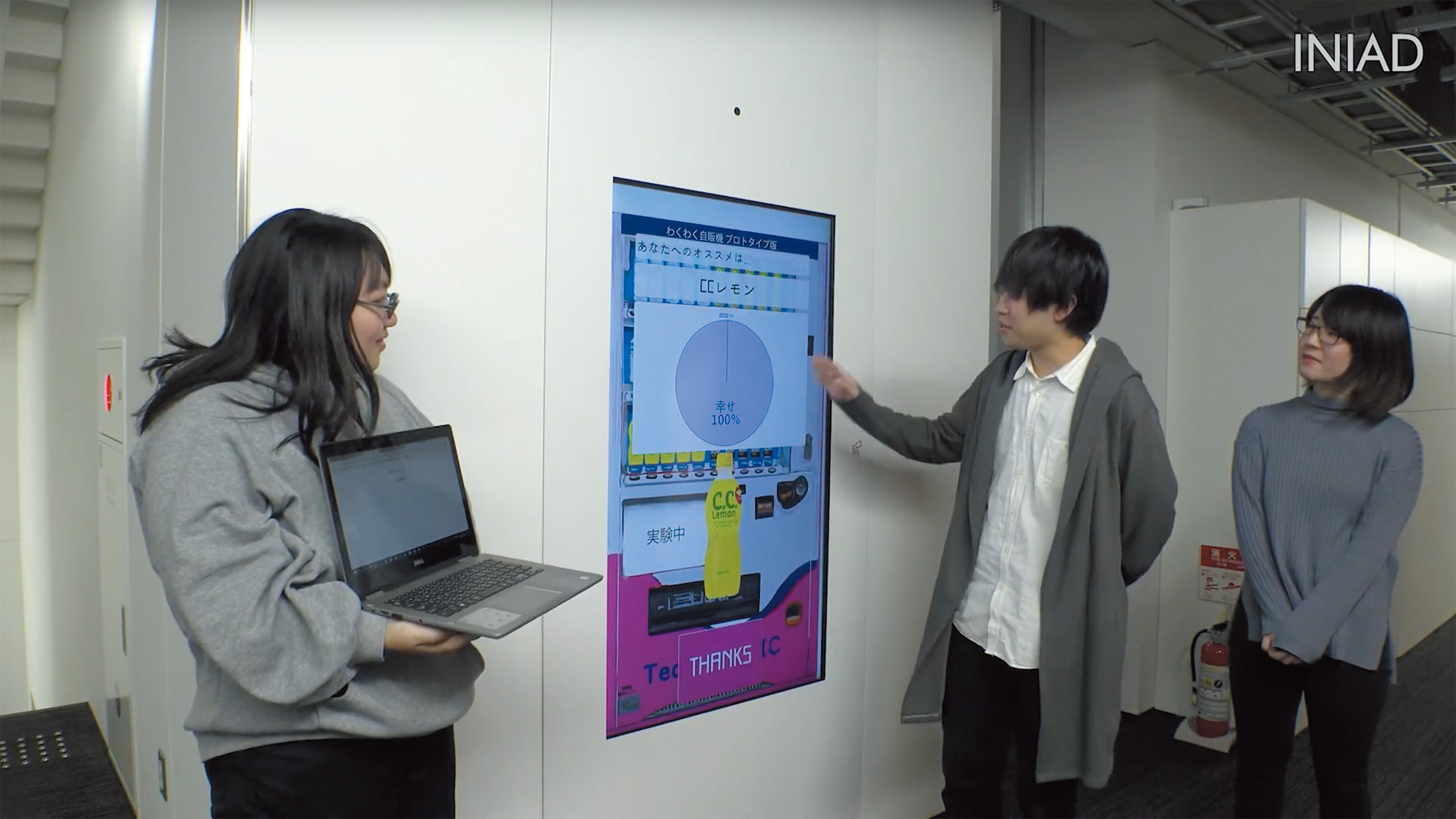
Exciting Vending Machine
This project, with the concept of “entertaining foreign visitors to the Tokyo 2020 Olympics and Paralympics even with small, trivial events,” developed an “Exciting Vending Machine” that recommends drinks matching your current mood. Using AI technology, it estimates emotions from users’ facial images and suggests recommended drinks based on those values.
INIAD encourages active use of generative AI.
In team practicum as well, many results have been produced regarding new ways to utilize generative AI.
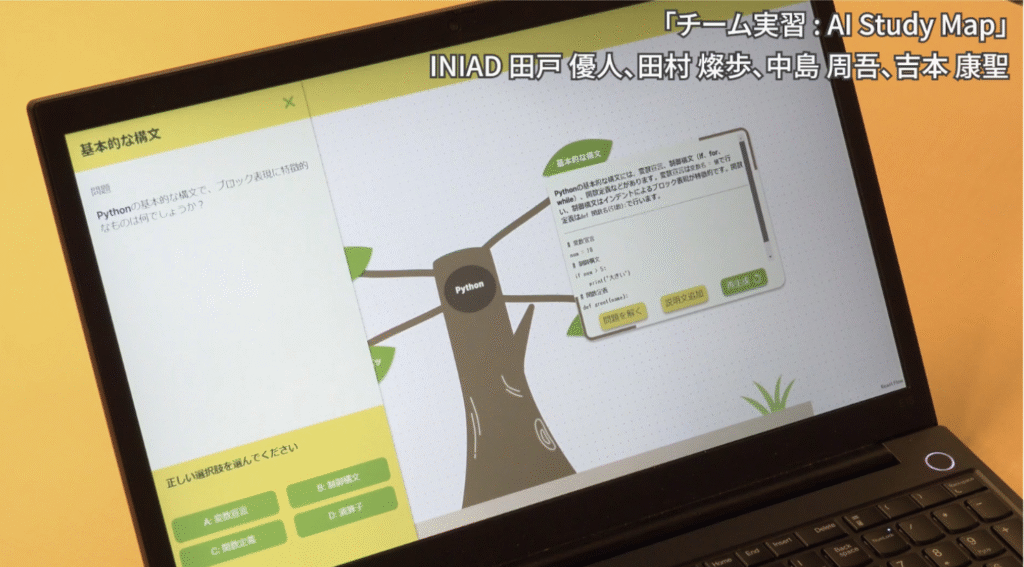
AI Study Map
This is a learning support web application for university students that combines generative AI with mind map learning. In this application, when you input a learning theme, ChatGPT automatically generates a mind map for learning that theme. For example, if you input the keyword Python, it displays learning topics such as basic syntax and functions. When you correctly answer confirmation questions for each topic, the next learning topic developing from that item is displayed. Through such learning, it supports systematic learning of the learning theme.
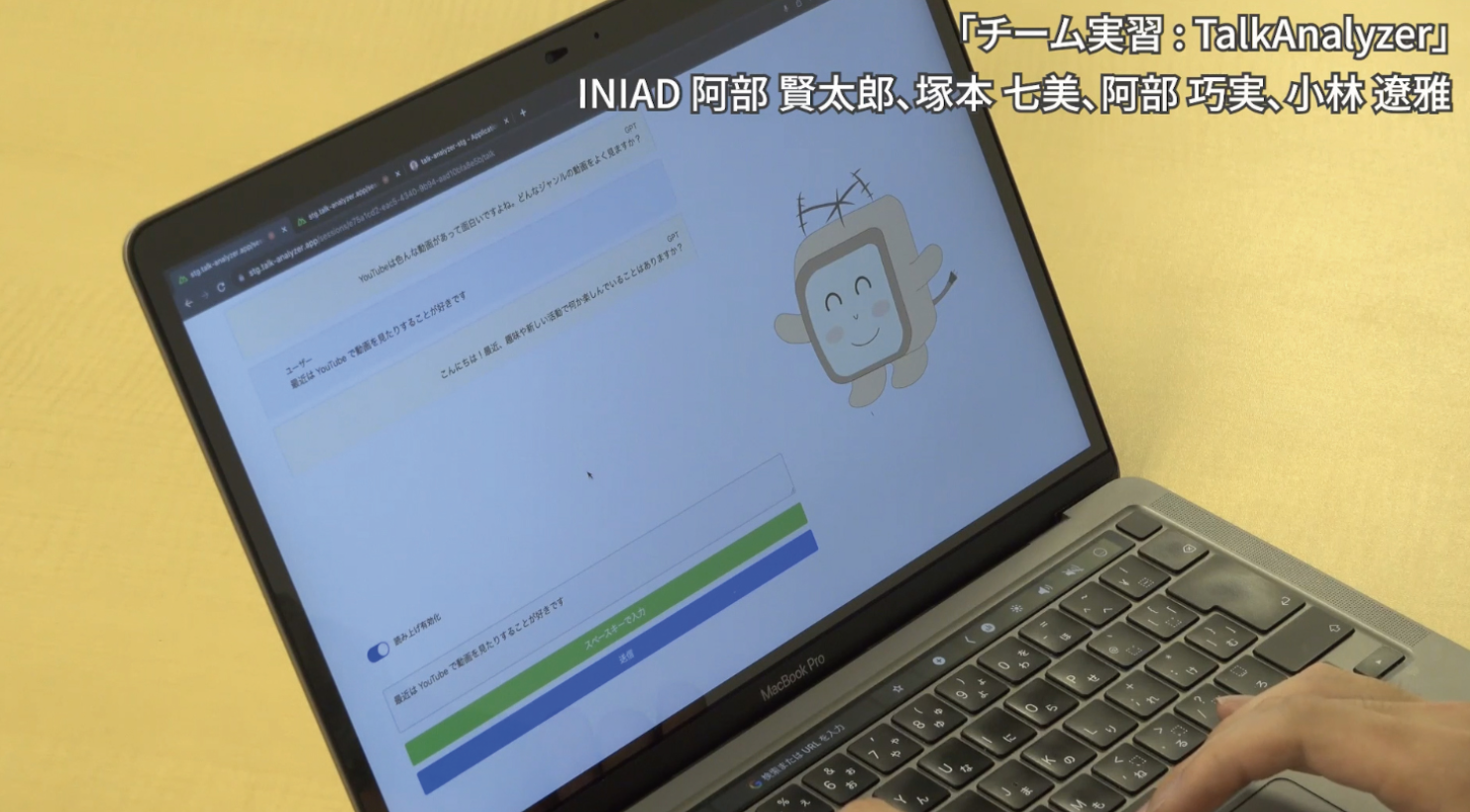
TalkAnalyzer
We developed a personality diagnosis application using generative AI. In conventional personality diagnosis, you needed to answer predetermined questions for personality diagnosis. In this application, ChatGPT conducts personality diagnosis based on responses during natural conversation with users.
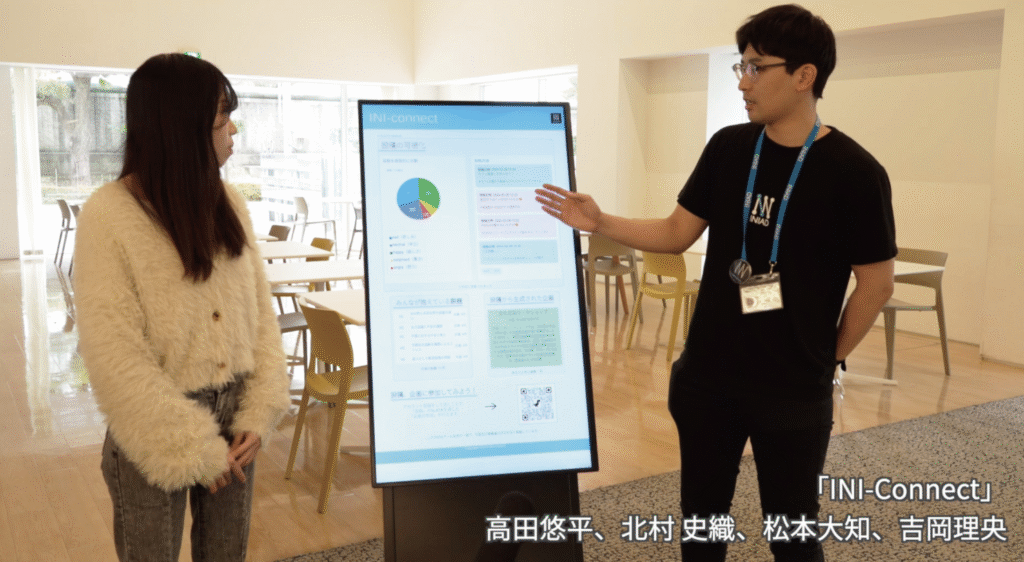
INI-Connect
We developed an application that improves INIAD students’ networking using generative AI. For example, when someone posts a concern like “Job hunting isn’t going well,” generative AI extracts concerns that INIAD students have. When many people empathize with it, a plan is generated. Then, when students press the participate button, a channel is automatically created on Slack, promoting student networking.
In the fourth year, students belong to faculty research laboratories and work on specialized research themes over one year. Many research projects aim to solve social challenges using information and communication technology.
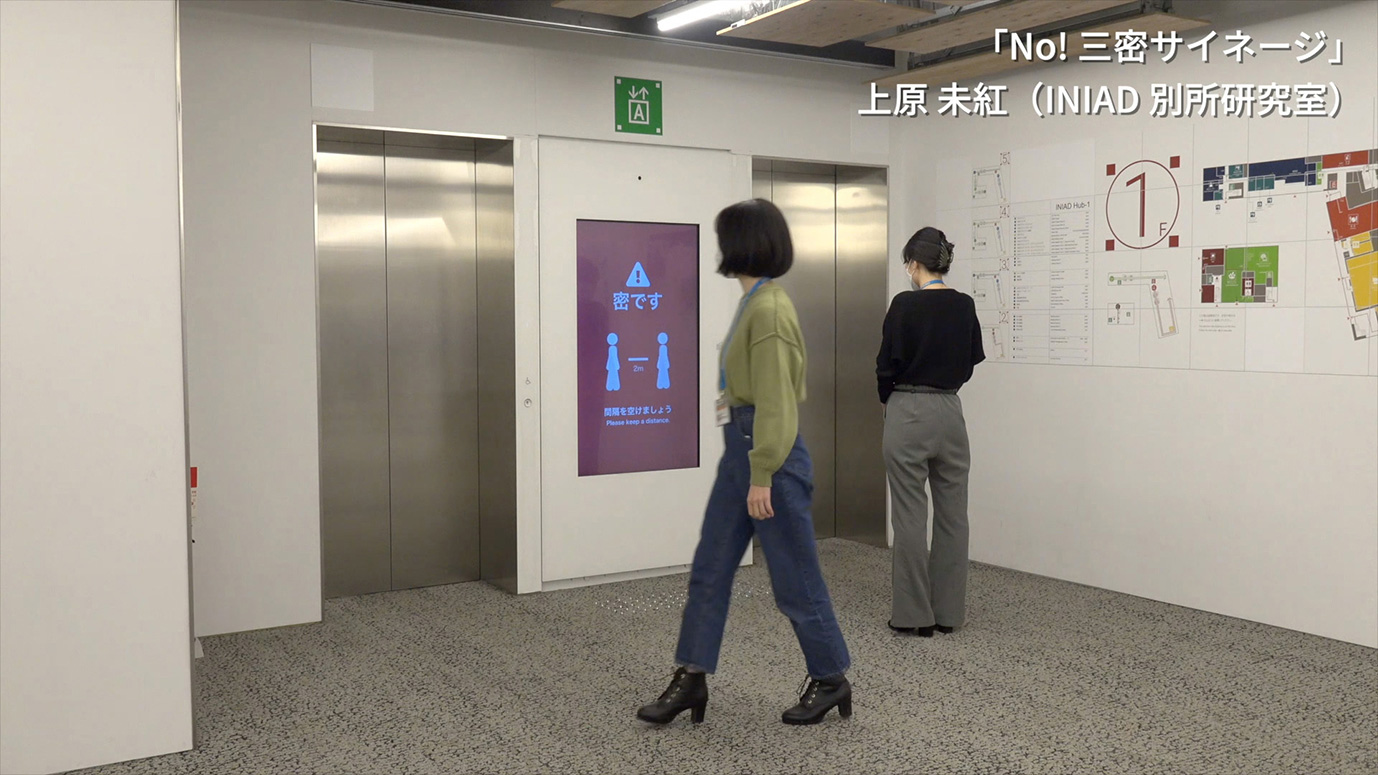
No! Three Cs Signage
I created this to avoid the three Cs using digital signage. It recognizes people from cameras attached to the signage and analyzes their distance using AI. When crowding is detected as a result, it issues warnings from the signage to encourage social distancing. I plan to verify whether this app is actually effective in avoiding the three Cs by installing and experimenting with it at the university.
Excitement Detector
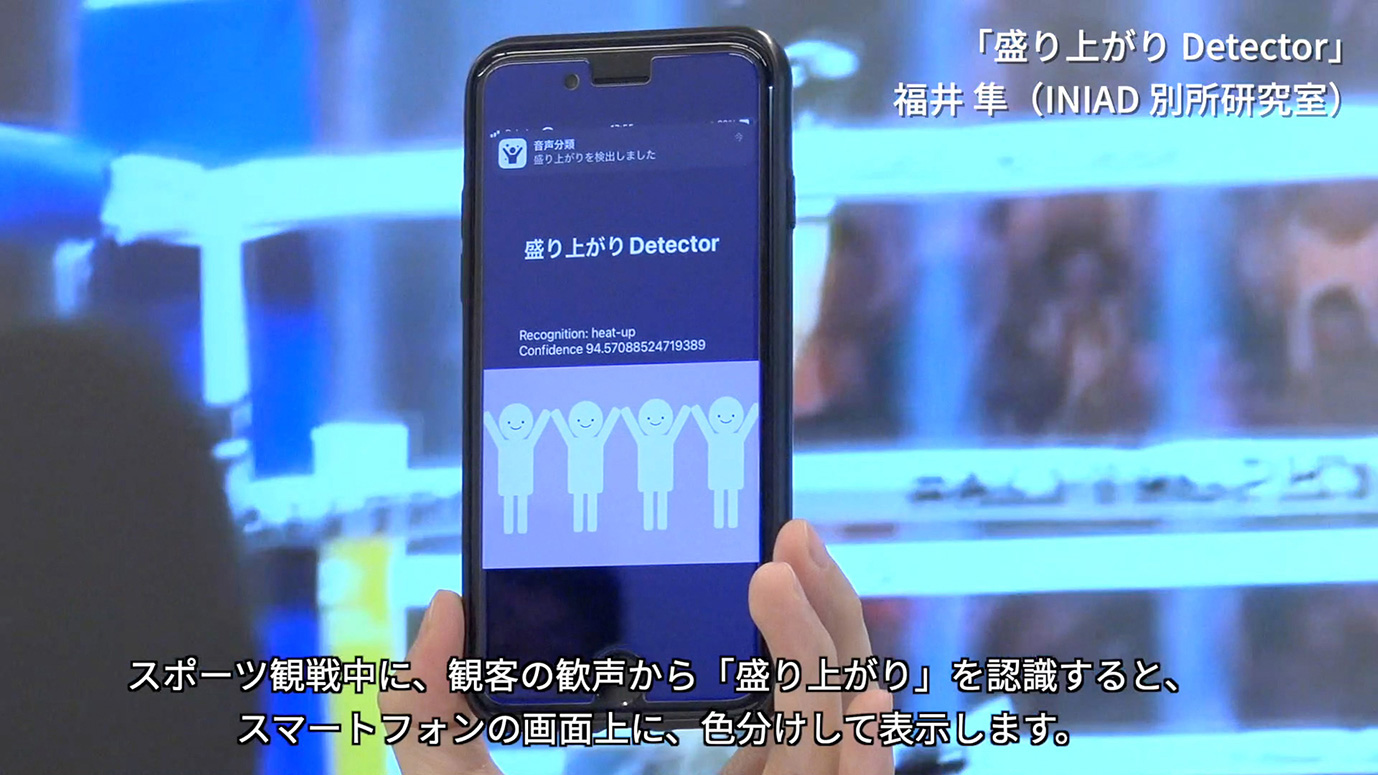
This is an app that visualizes “excitement” for hearing-impaired people to enjoy sports viewing. It learns sports cheering data using AI. During sports viewing, when it recognizes “excitement” from audience cheers, it displays color-coded information on the smartphone screen. When the smartphone is asleep, it links with a smartwatch. When it recognizes “excitement,” it notifies through vibration.
AiDAR for VI
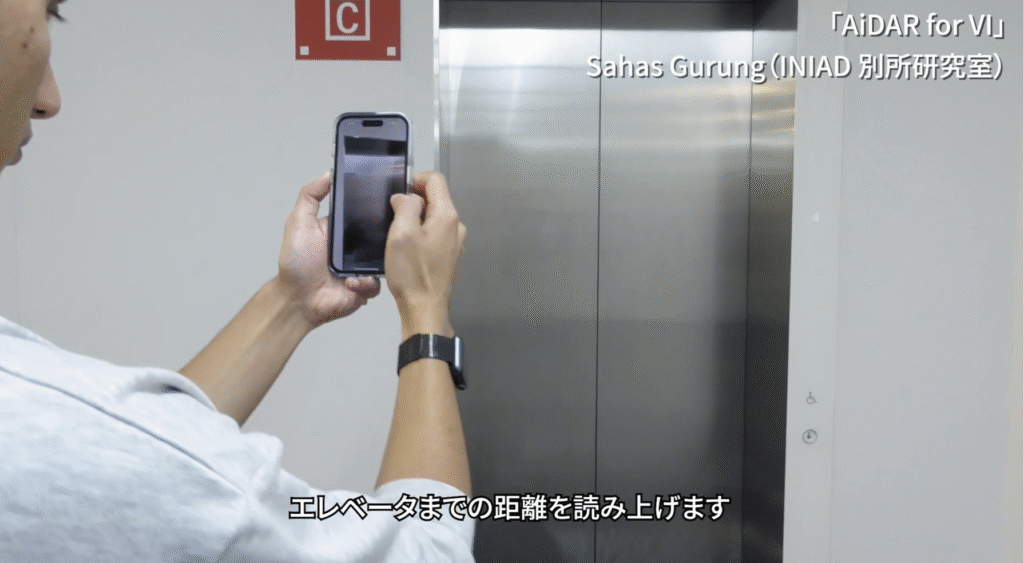
I’m developing a smartphone app for visually impaired people that tells them the distance to obstacles and explains what’s in front of them. Using the smartphone’s LiDAR sensor, it tells the distance to obstacles, and by using GPT-4 Vision, it explains what’s around. For example, it can check the distance to a wall and read aloud the contents of floor maps written on walls.
☆INIAD Navi☆
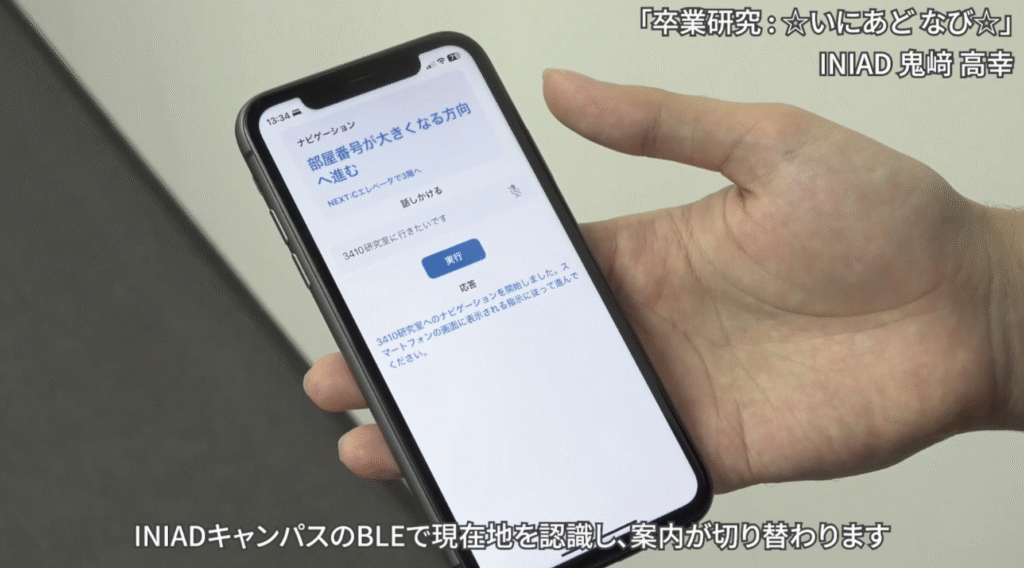
I’m developing an INIAD navigation app utilizing large language models. It recognizes your current location using INIAD’s BLE (Bluetooth Low Energy) infrastructure, and when you tell ChatGPT where you want to go, it can navigate from your current location to your destination. For example, if you say “3410 laboratory,” navigation to that room begins. When passing through locked doors during navigation, it automatically unlocks them using INIAD’s API. It also has functions to interactively control room lighting and other features.
Administrative Communication DX Using Generative AI and Digital Signage
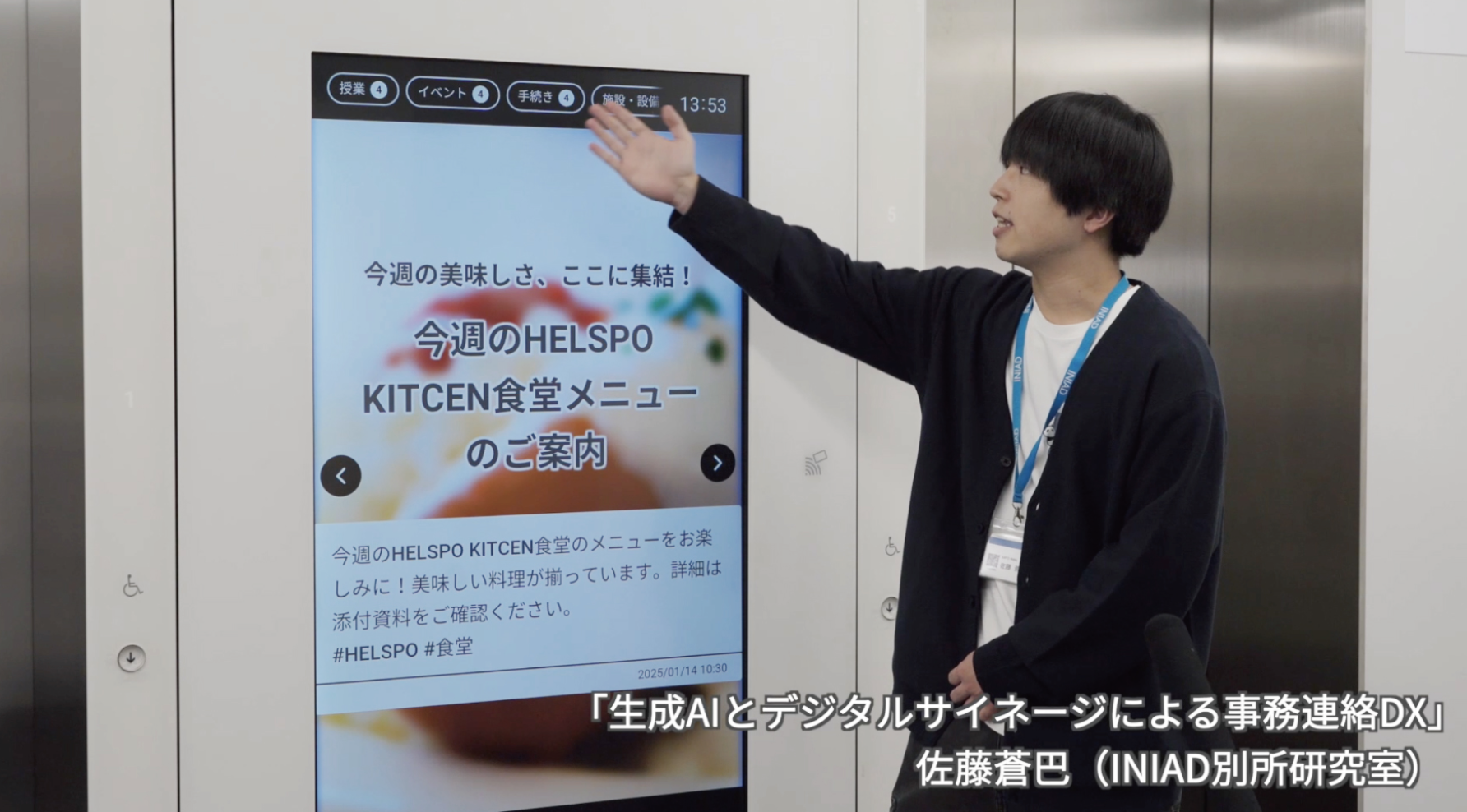
I developed a system that allows viewing administrative communications on campus collectively on digital signage using generative AI. Previously, displaying information on digital signage required manually creating content, which was time-consuming. So I developed a system that fully automates everything from generating digital signage content to posting based on administrative communications posted on Slack using generative AI. For example, catchphrases, background images, and genre classifications at the top are all done using generative AI. Even after graduating from INIAD, I want to continue contributing to realizing DX using generative AI.
At INIAD’s school festival, various projects utilizing skills acquired at INIAD are conducted. Even at the online school festival held during COVID, students handled everything from system construction to operation.
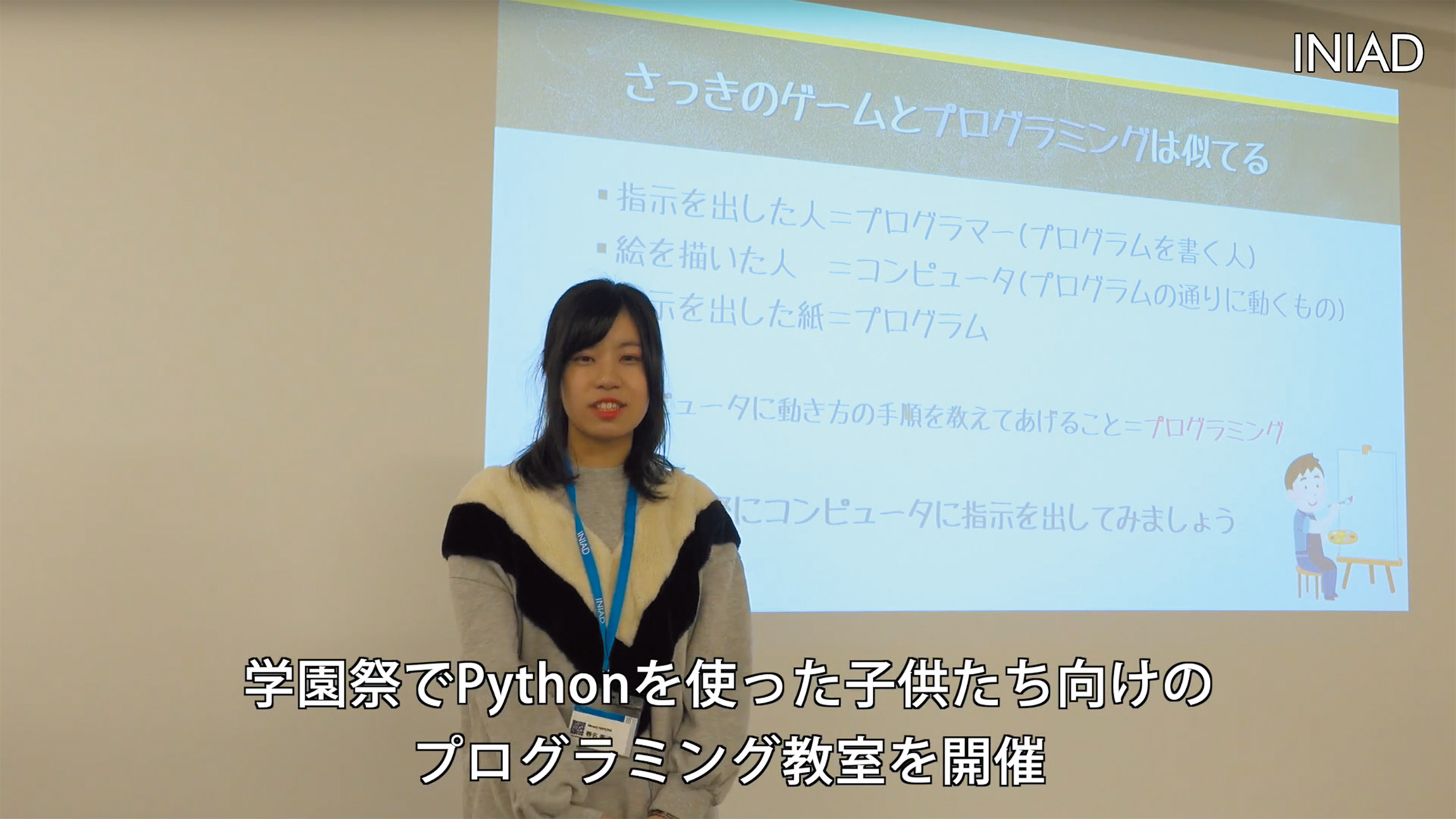
Programming Class for Children
I learned the fun of programming at this school, and I wanted everyone to know that if you can write programs, you can give form to various ideas. So I held a class at the school festival where children who don’t know programming can learn programming enjoyably using Python.
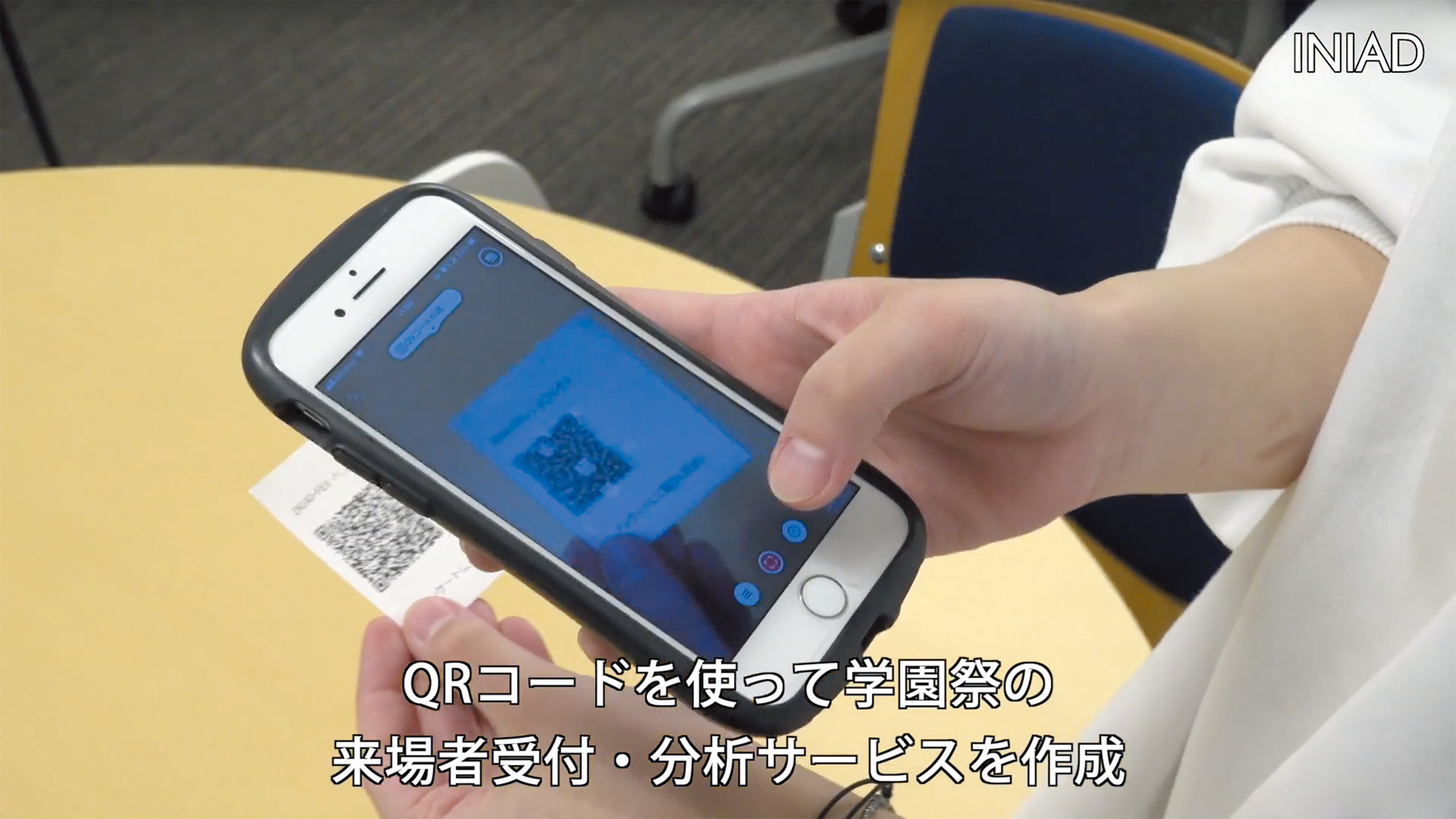
QR Code Reception App for School Festival
Utilizing knowledge of web apps and Git learned in classes, I developed a reception app using QR codes for the school festival. We can have visitors input age and gender at the general reception for use as statistical data, and by reading QR codes at circle organization receptions, we can check who visited where.
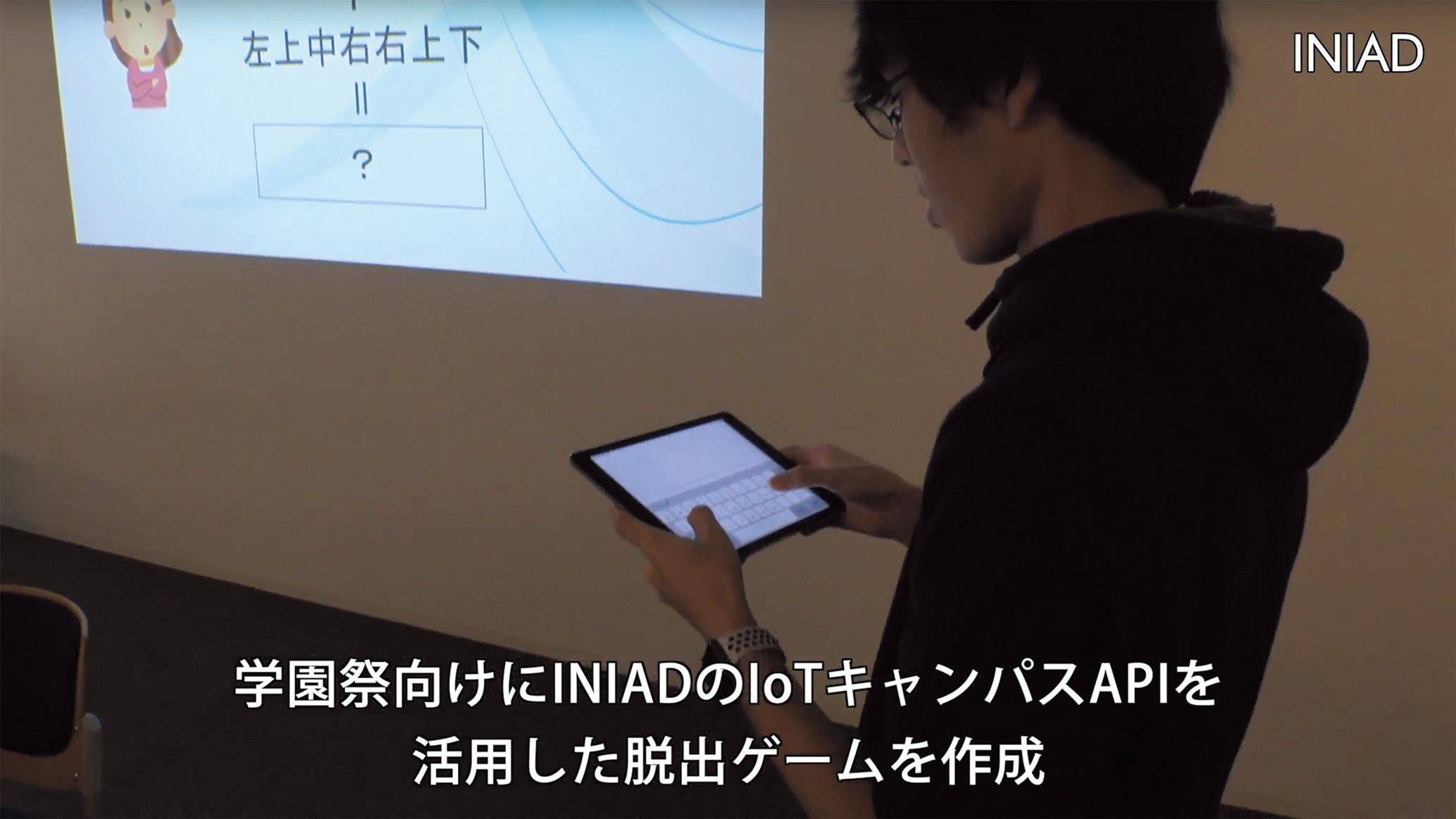
Escape Game
I was interested in app development using APIs that control INIAD’s IoT facilities, so I developed an escape game using them at the university festival. By solving problems displayed on room monitors, the next room’s lock opens and the room lighting dims. Then you can escape by solving problems in the next room, then the next room… It’s very interesting to be able to affect things in the real world through programming.
INIAD students’ activities aren’t limited to campus.
Here we introduce works by students who won awards at the Tokyo Public Transportation Open Data Challenge.
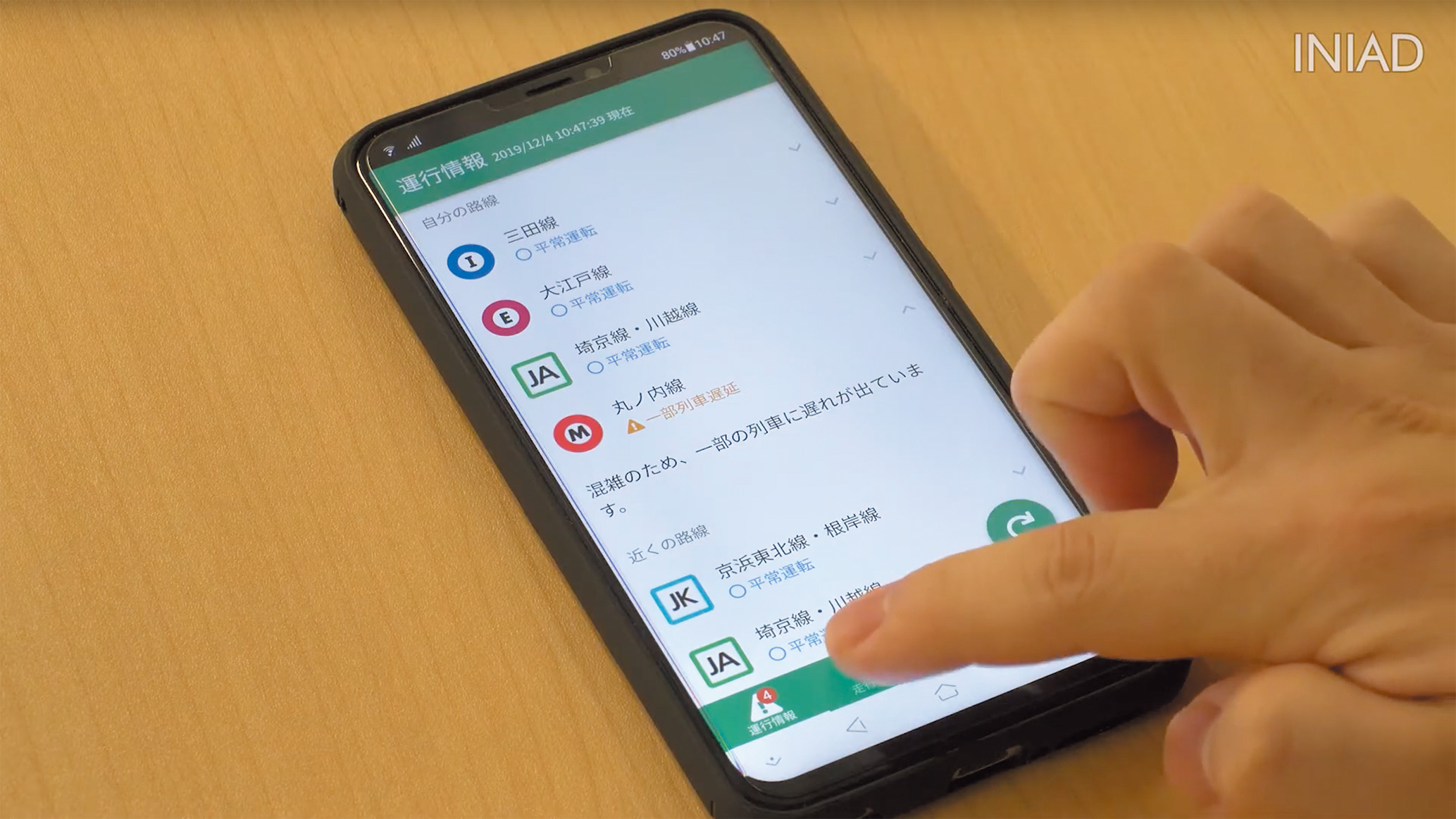
Timetable App “DigiSilbe”
“DigiSilbe” is a Tokyo public transportation guide app that lets you experience the mobility revolution through MaaS. It uses public transportation-related open data provided by the Tokyo Public Transportation Open Data Challenge. I started learning programming after entering university, but I’m very happy that the apps and skills I created can enrich not only my own life but also the lives of people around me.
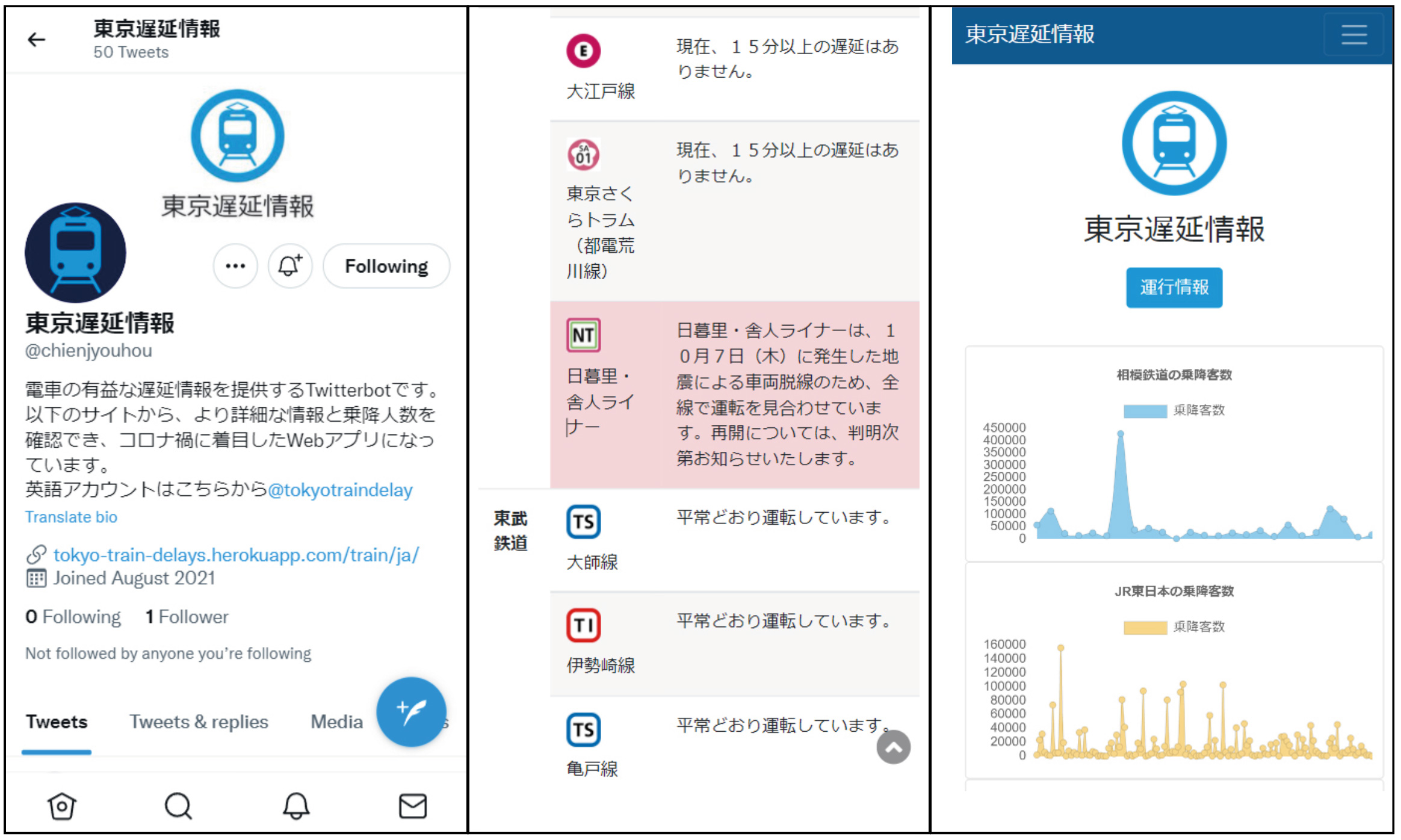
Tokyo Train Delay
“Tokyo Train Delay” is an X (formerly Twitter) bot that tweets real-time delay information for metropolitan area transportation using open data. We also developed a web app that provides real-time train delay information more detailed, concise, and easy to read. It’s also available in English, so not only Japanese but also foreigners can use it to achieve smooth movement and comfortable living in Tokyo.
INIAD also has a system encouraging academic presentations outside campus. Many undergraduate students present research results at domestic and international academic conferences annually. Multiple students have been recognized for their achievements so far.
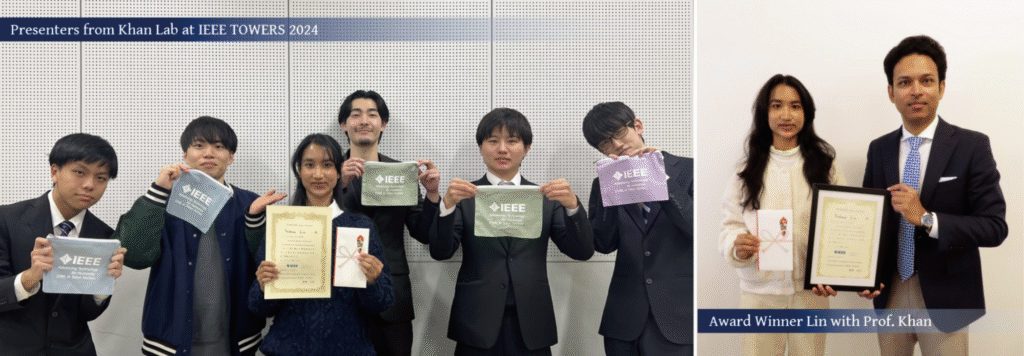
IEEE TOWERS Best Award