Learning in a State-of-the-Art Space
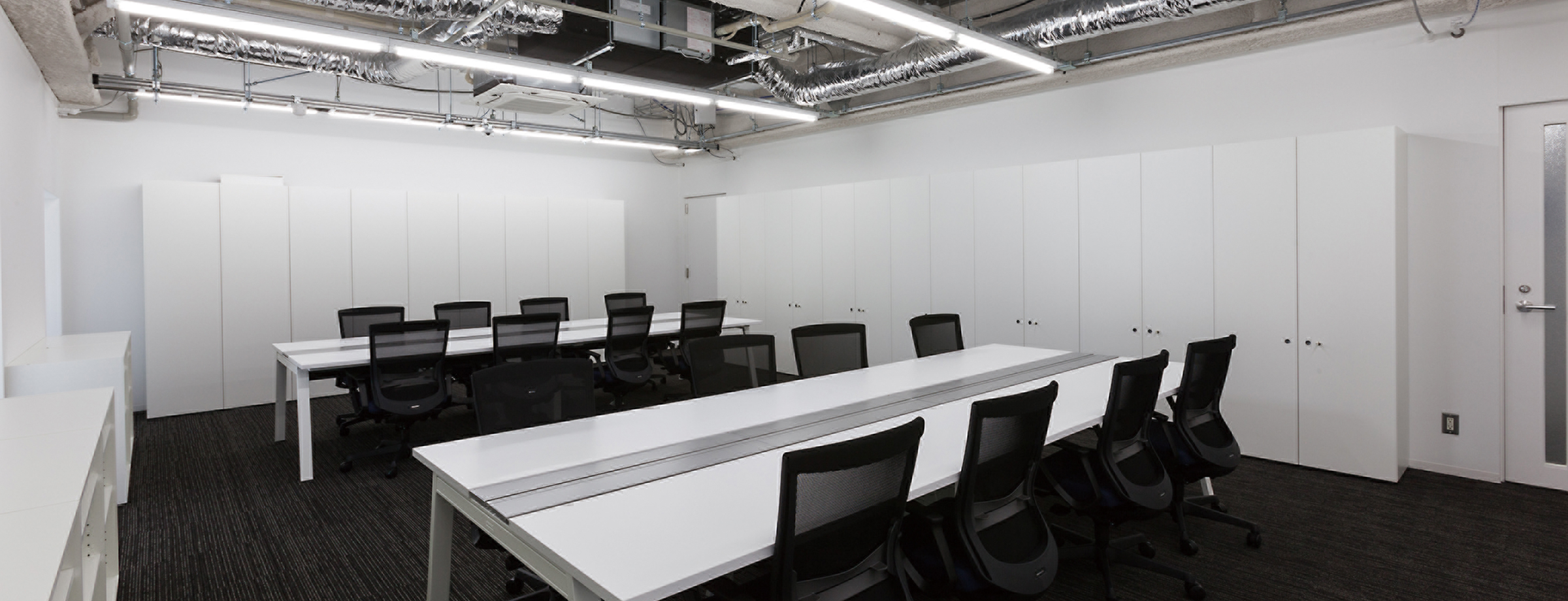
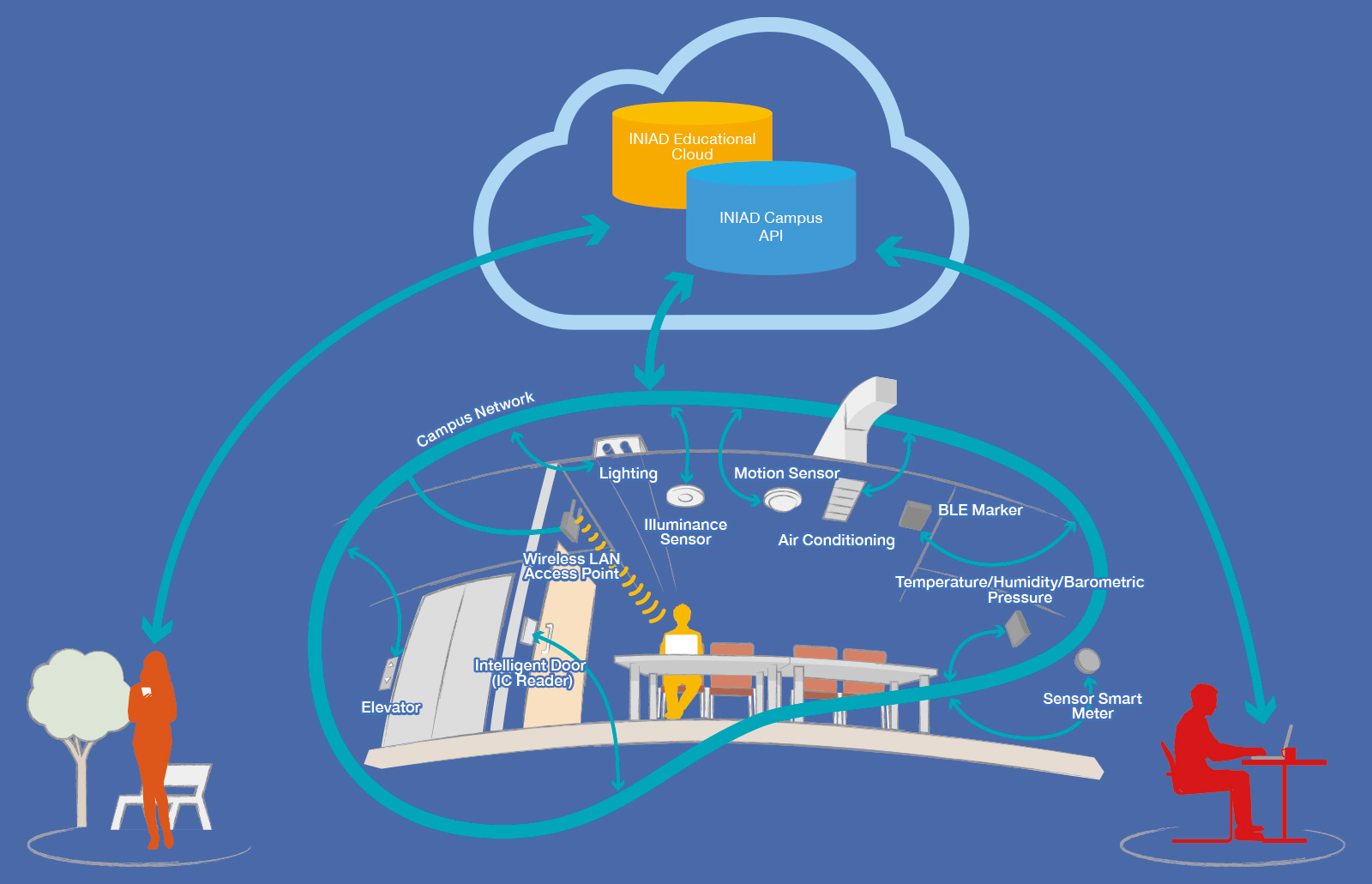
Located on the Akabanedai Campus, INIAD is designed to provide people with an optimal environment by connecting diverse facilities and equipment to a network using cutting-edge IoT technology. These systems operate in coordination, responding dynamically to the conditions within the campus.
This concept of optimizing the control of facilities and equipment based on spatial context is the ultimate goal of the TRON Project, led by INIAD founder Ken Sakamura. The Akabanedai Campus serves as a realization of a “future campus” that incorporates the fruits of this extensive research.
In the laboratories, there are no traditional switches for lights or air conditioning. Instead, the environment is automatically sensed and controlled using campus-wide sensors, while user instructions are issued via smartphones or PCs over the network. Access to classrooms and labs is managed through IC cards or smartphones. Furthermore, lecture announcements and notifications are delivered via digital signage installed throughout the campus or directly to students’ smartphones.
The Entire Building is an IoT Teaching Material
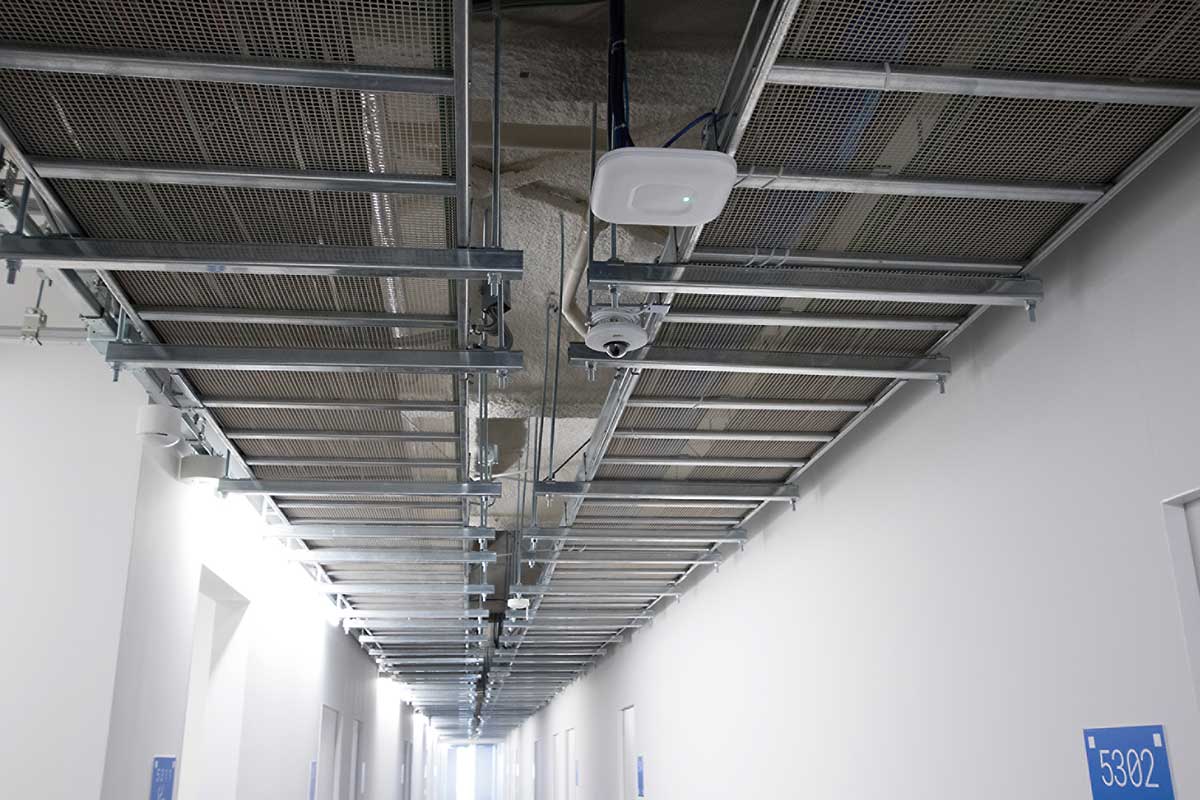
At INIAD HUB-1, various facilities and equipment—including sensors, lighting, air conditioning, lockers, and elevators—are directly connected to the cloud and can be operated via APIs (Application Programming Interfaces). INIAD actively integrates these APIs into its curriculum. By learning and programming with these APIs, students can control this IoT-enabled smart campus as they wish, within the scope of their assigned access privileges.
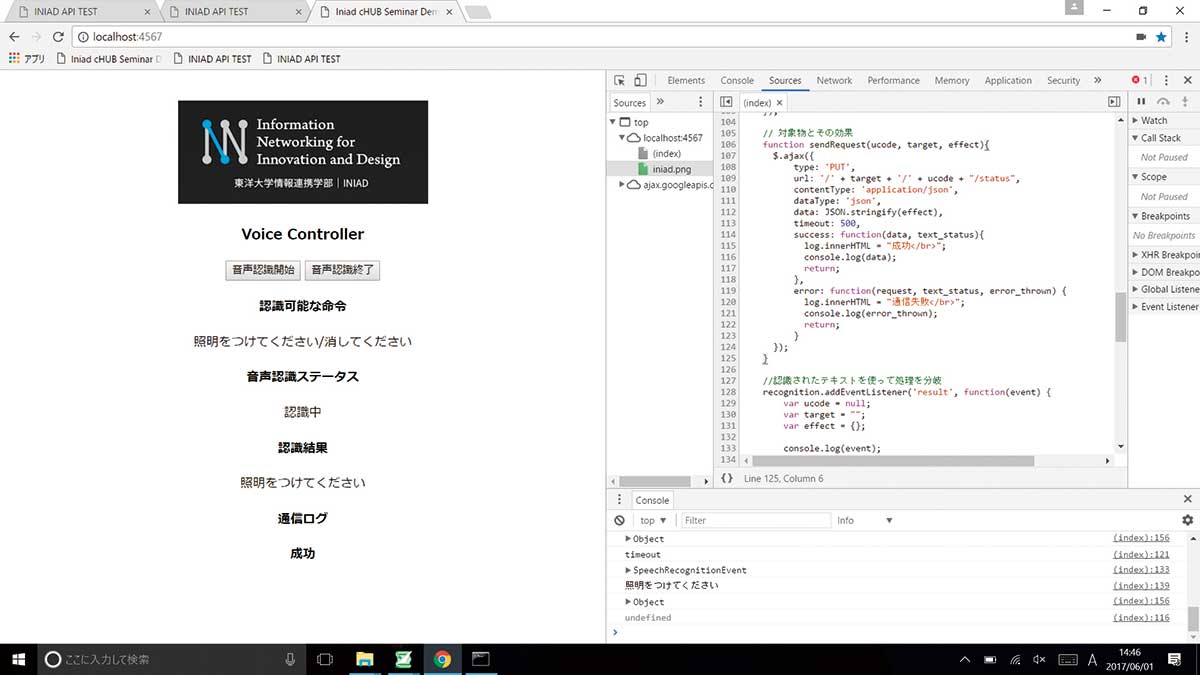
For instance, consider an assignment such as “write a program to cycle the lighting through FULL, DIM, and OFF.” Students write their code using the INIAD API and can immediately execute it, presenting their results by projecting their screens in the classroom to demonstrate the real-time effects.
Furthermore, students are taught to develop more advanced applications by “mashing up” the INIAD API with various external service APIs. For example, a program that controls room lighting through voice commands like “Turn on the lights” or “Turn off the lights” can be realized by mashing up the INIAD API with generative AI service APIs provided by companies like Google.
In this way, INIAD students acquire the essential knowledge for the era of IoT x Generative AI, following the principles of Open APIs.
Examples of INIAD Campus API Usage
- When outside light enters during a presentation, the blinds are automatically lowered, and the lights are turned on.
- When you enter a room by holding up an IC card, the lighting and air conditioning operate with settings tailored to the person who entered.
- If you enter your departure and destination floors on your smartphone in advance, you can automatically control the elevator and move to your destination floor just by going to the front of the elevator, even when both your hands are full carrying luggage.
Intelligent Lockers
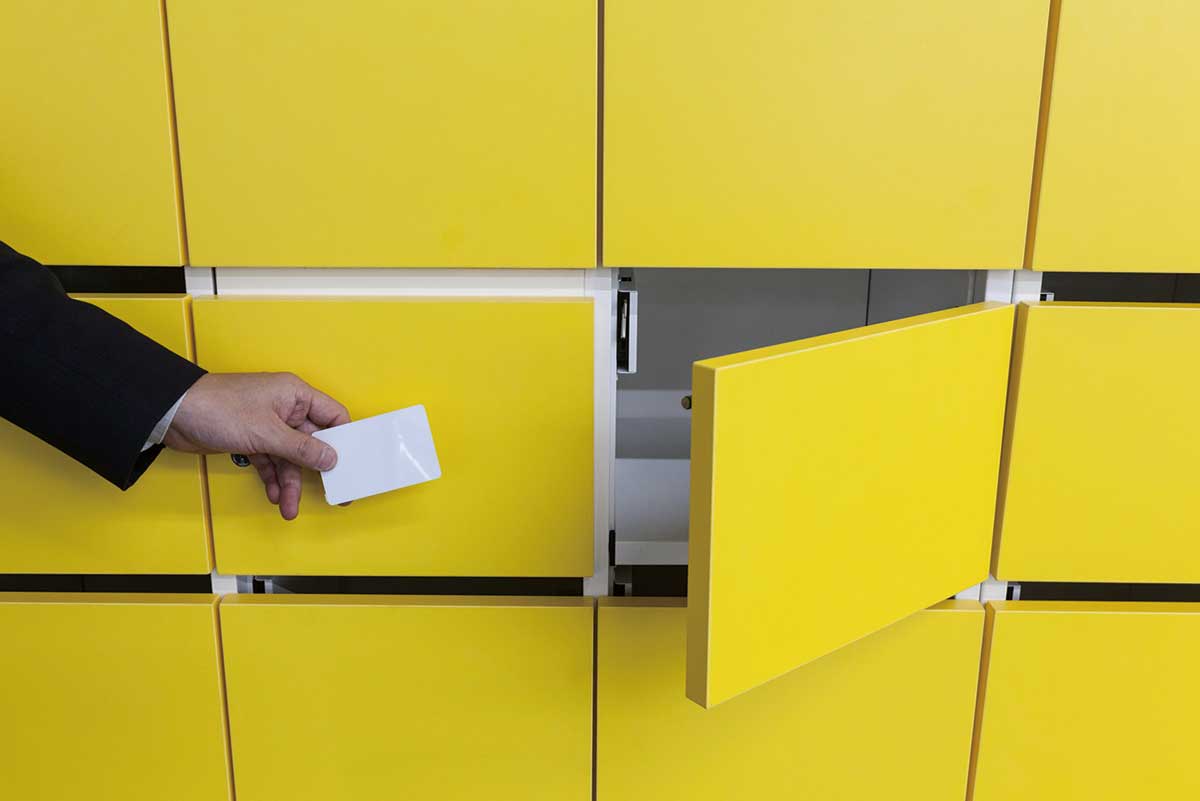
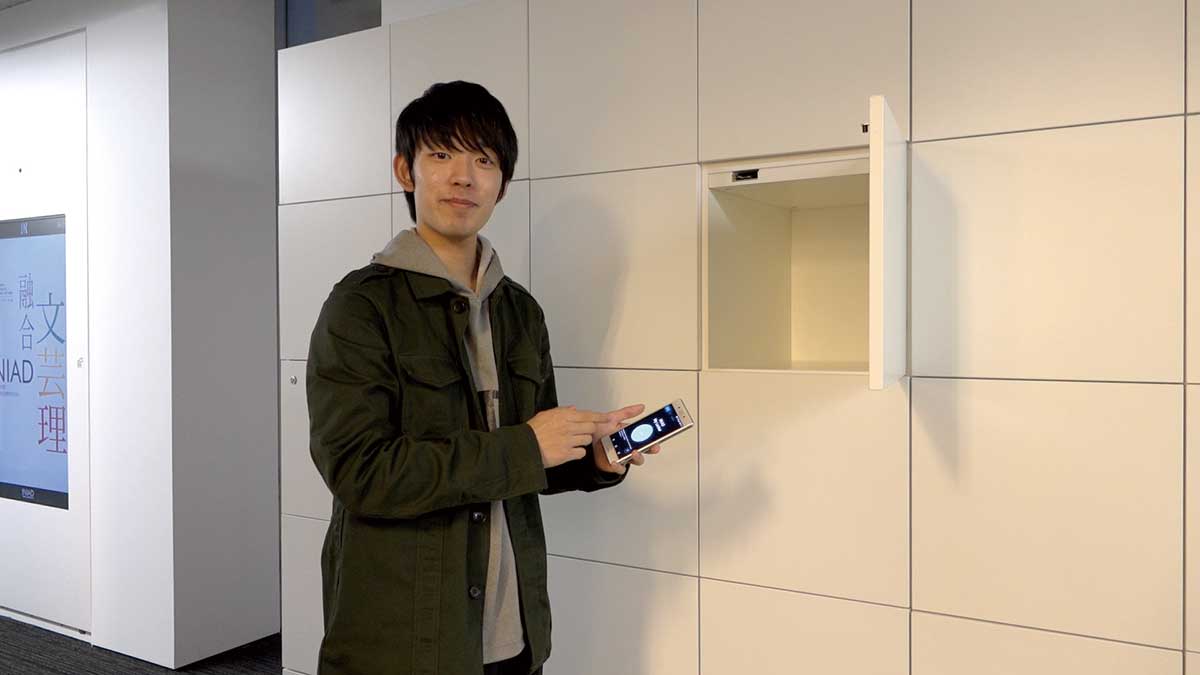
The surface of the intelligent lockers has no nameplates and features a simple design with a grid of panels. Each of these panels, or locker doors, can be opened by IoT control. When a registered IC card is held over the card reader, your locker door opens. Since it is IoT-controlled, it can also be opened from a smartphone. The IC card is a so-called transportation IC card. Your train pass becomes your locker key.
The Intelligent Locker is, in fact, an educational tool designed for first-year students. By programming the system to link the door with a smartphone or IC card, students can unlock their own lockers for the very first time.
As their skills progress, students can implement creative features—for example, sending a
Digital Signage
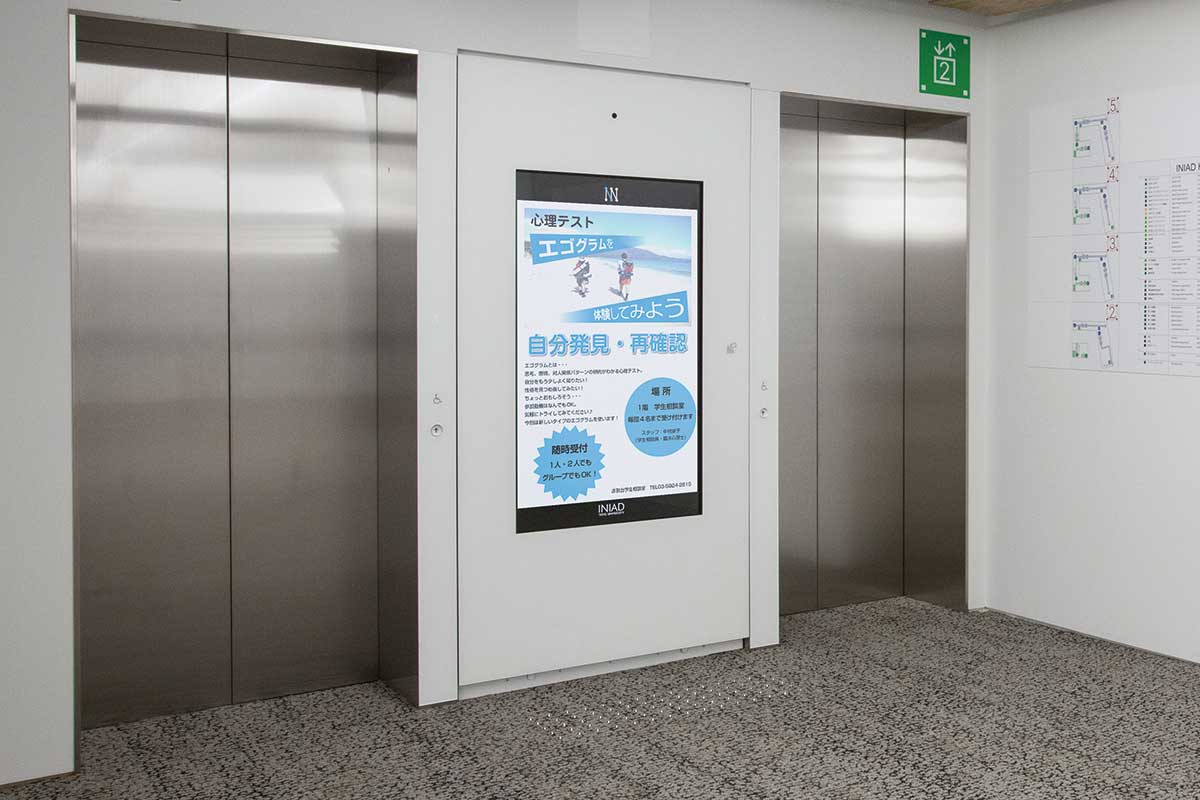
In line with its policy of eliminating paper, INIAD has no blackboards or whiteboards in its classrooms, nor does it have bulletin boards for posting paper. For this reason, many digital signage displays are installed throughout INIAD HUB-1. Of course, information can also be obtained from smartphones and PCs, but digital signage is effective for disseminating information widely. The main digital signage is a 55-inch touchscreen display. The displayed information scrolls by quickly, but you can touch it to stop it, find the information you need, and read it on the spot or import it to your smartphone or other device. In addition, many projectors that project onto walls are also installed, making it easy to disseminate information within INIAD.
T-Car and IoT Test Hub
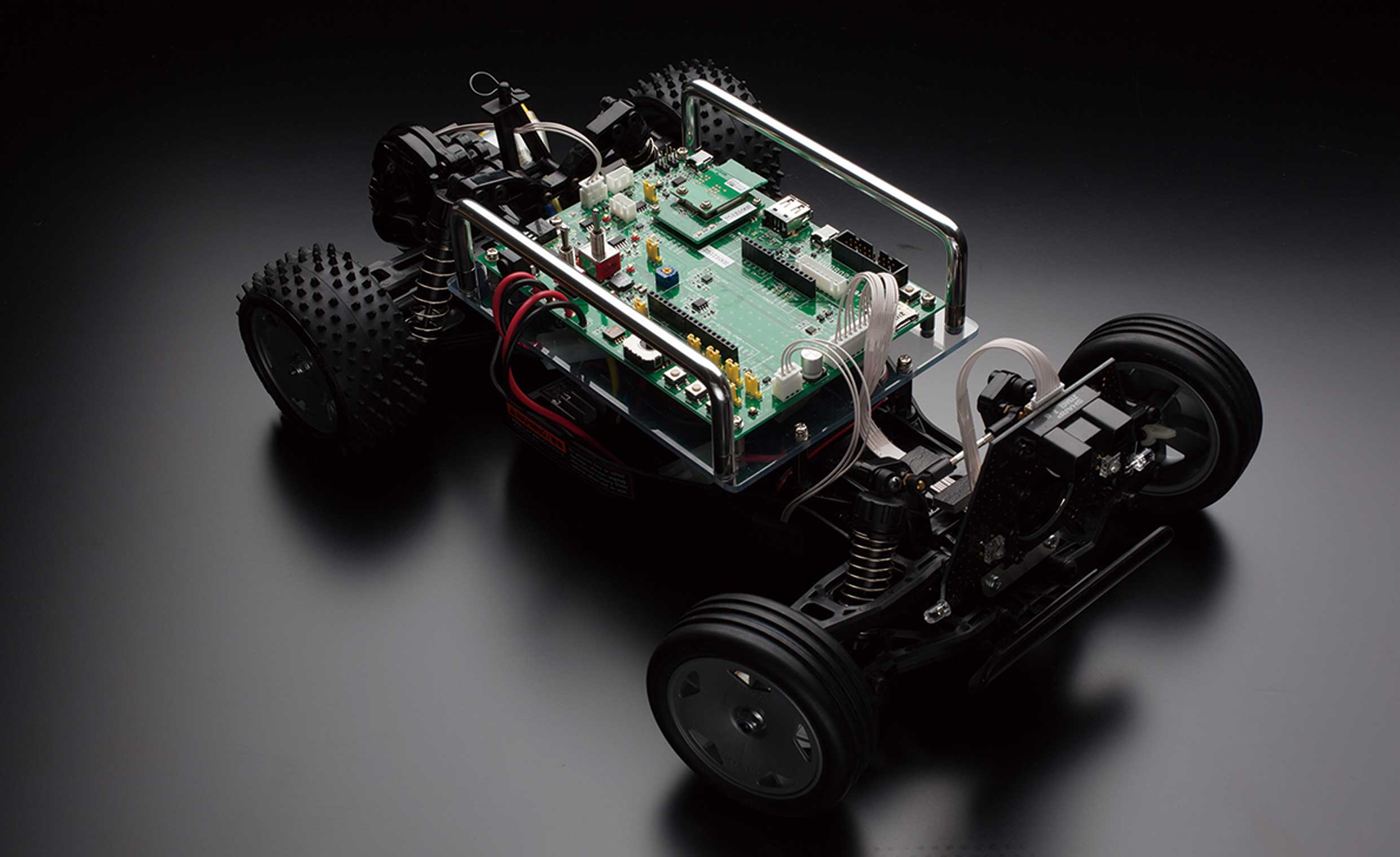
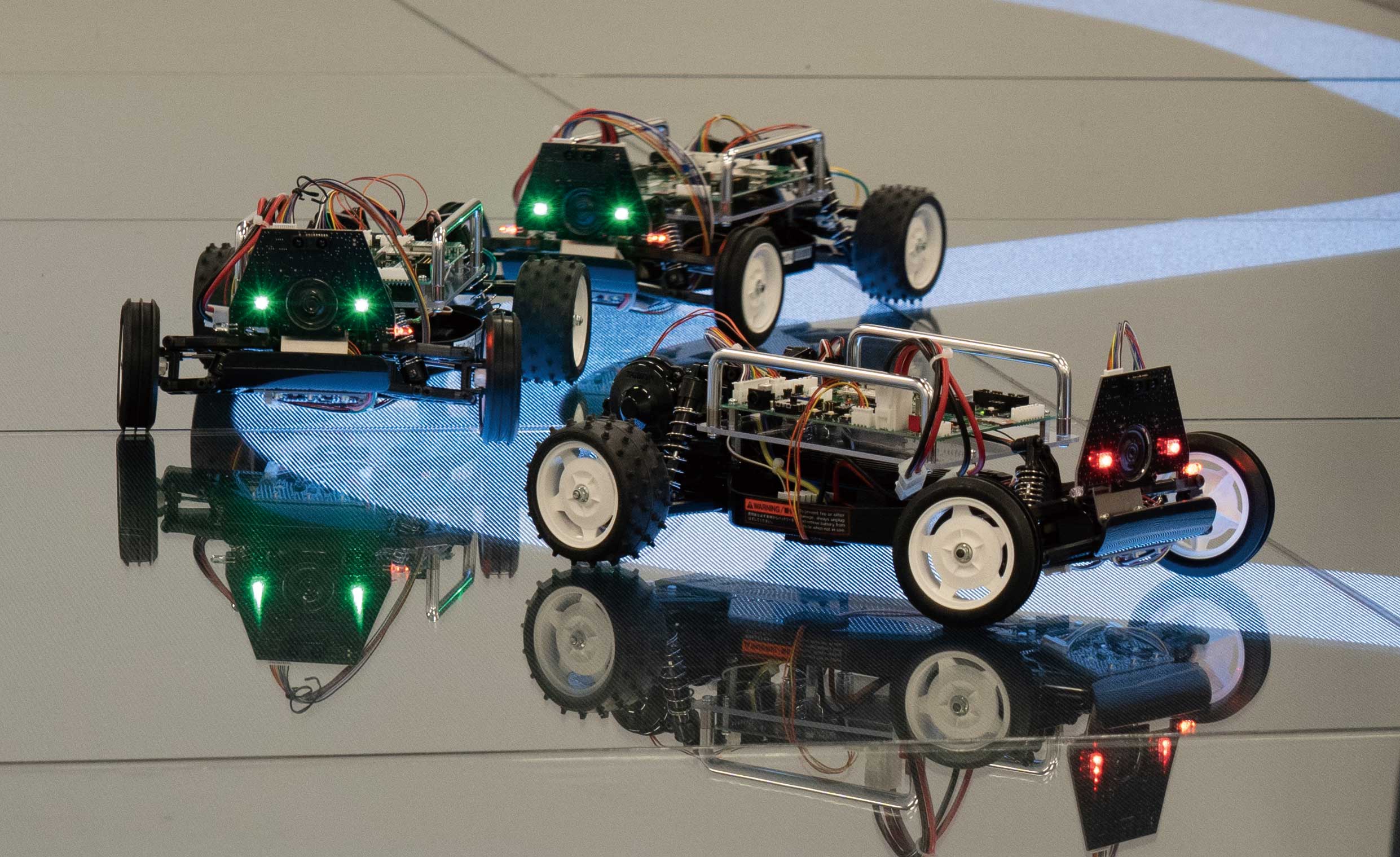
To learn about IoT systems—which leverage high-performance computing and diverse information from the internet—automobiles serve as an ideal subject. Accordingly, INIAD has developed a specialized educational tool called “T-Car,” a 1/10 scale model vehicle.
The T-Car is built on a radio-controlled car frame equipped with various sensors to capture data such as light levels, distance, speed, temperature, and lane positioning. It features a control board for speed and steering, powered by a computer running the “µT-Kernel” real-time operating system.
Connected to the internet via the 6LoWPAN wireless communication protocol, the T-Car allows students to experiment with various scenarios applicable to autonomous driving. This includes retrieving environmental sensor data over the network and implementing optimal control based on decisions made by cloud-based AI.
The IoT Test Hub is an experimental room with a circuit for running the T-Car. The IoT Test Hub is equipped with a state-of-the-art environment that utilizes IoT, allowing students to learn a wide range of technologies related to IoT. The room is equipped with motion capture, cameras, projectors, displays, etc., and a vast 7m x 3.5m display is laid on the floor.
By displaying a course on this floor display, the T-Car can automatically determine the course lanes using its lane information acquisition sensor and drive along the lanes. Since it can simulate various environments, it provides an environment where various experiments related to autonomous driving are possible, such as changing the shape of the circuit according to the time, simulating an accident and sending accident information to a running T-Car, experimenting with automatic following by intentionally mixing in slow-moving T-Cars, and simulating changes in road surface conditions due to rain or ice. In addition, by using the motion capture and cameras installed around the room, it is possible to detect the movements of other T-Cars over a wider area and have the T-Car select a less congested route. Furthermore, since the status of the simulation during the experiment can be displayed on the floor display for feedback, people in the room can understand the situation more intuitively.
Desks and Chairs
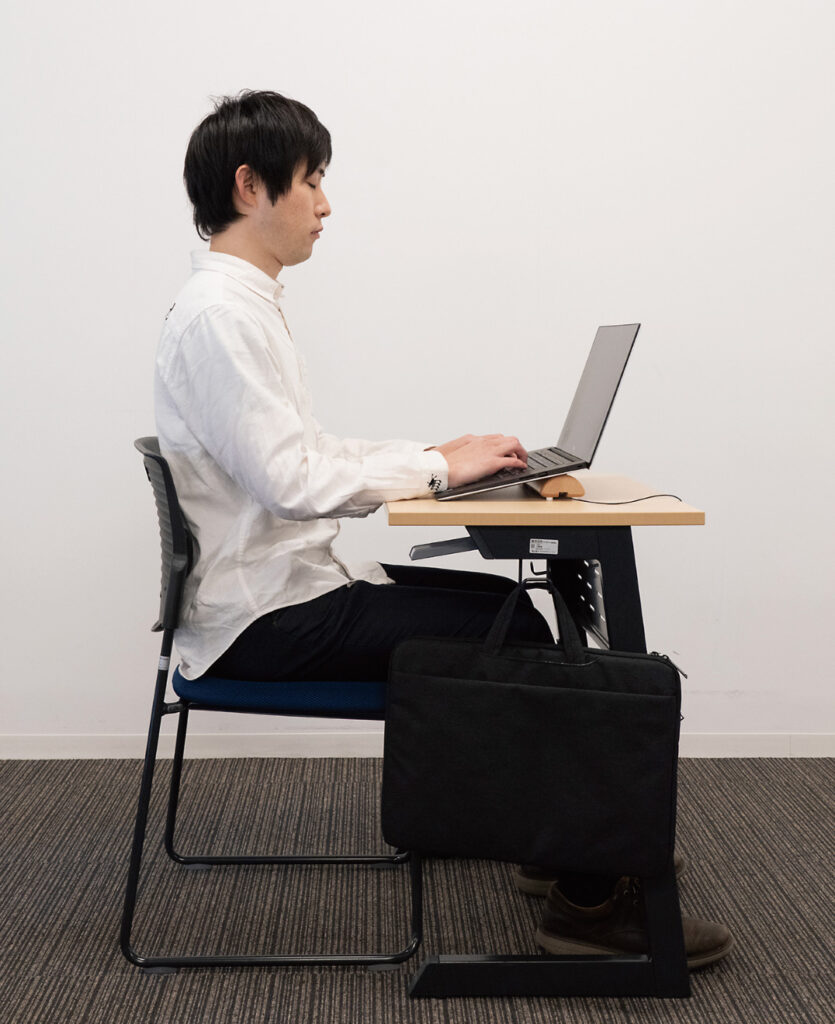
INIAD students attend classes with their own laptops. Recent laptops suitable for carrying around are thin, and their keyboards have almost no slope. Also, when a PC is placed on a desk, its screen is located near the surface of the desk, which forces the user to hunch over to look at the screen. The weight of a person’s head is about 10% of their body weight, which is about 6 kg for a person weighing 60 kg. In other words, it weighs as much as three 2-liter plastic bottles. Since it supports this weight, it is clear that a forward-leaning posture places a great burden on the neck and spine.
INIAD’s desks and chairs may look like ordinary classroom furniture at first glance, but they are desks for the IoT era designed by INIAD founder Ken Sakamura to solve this problem. A wooden “pillow” attached to the end of the desk with a magnet is included. When this pillow is placed on the desk and a laptop is placed on it, the PC naturally inclines. The keyboard has a slope of about 10 degrees, and the screen is raised. Also, since the angle of the arms becomes a natural shape of about 110 degrees, the head is raised, and the posture becomes straight. This greatly reduces the burden on the body.
The back of the chair has lumbar support (a firm cushion that supports the lumbar vertebrae), which reduces the burden on the lower back when leaning back. In addition, the seat of the chair is inclined 2 degrees so that the front side is lower, which helps to reduce the burden on the back of the knees.